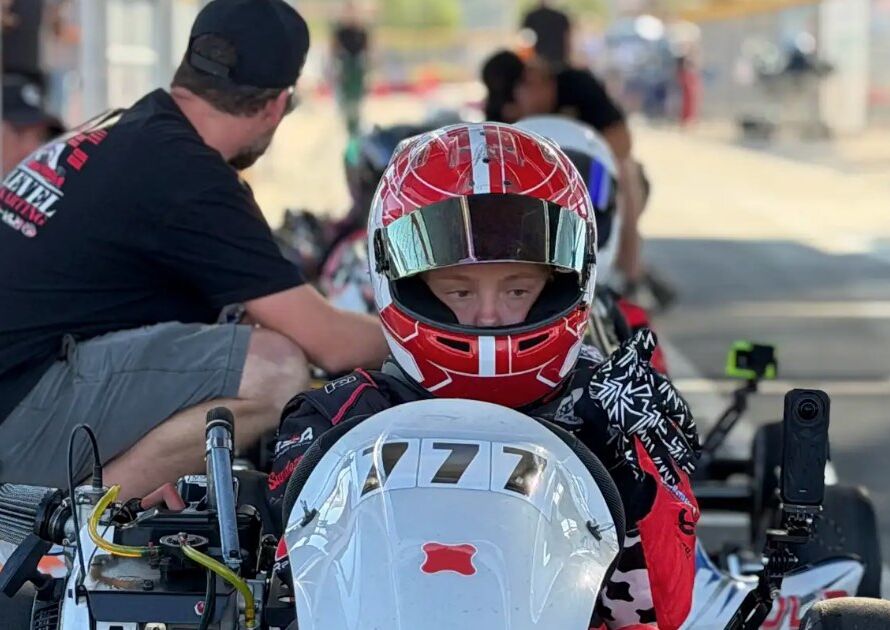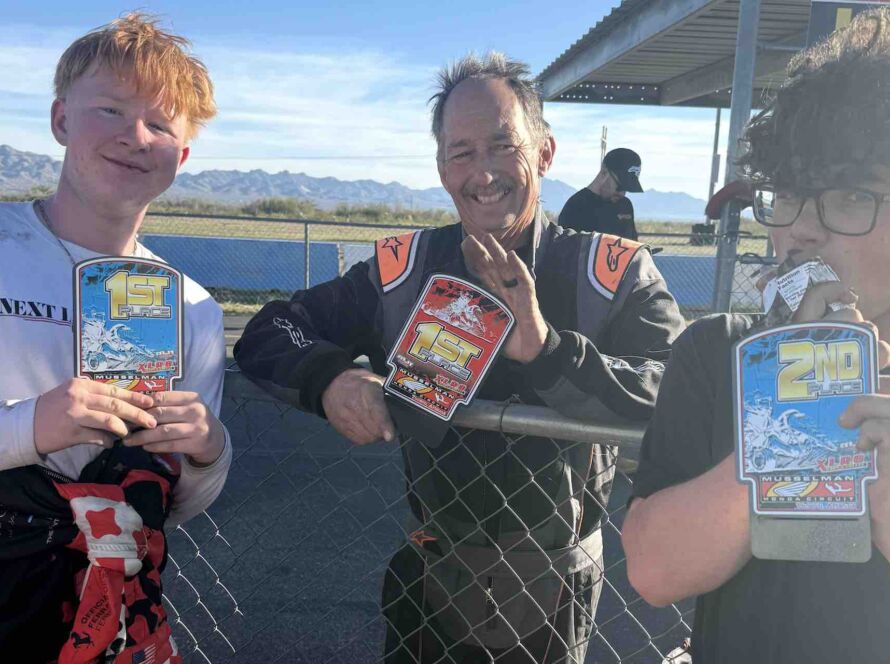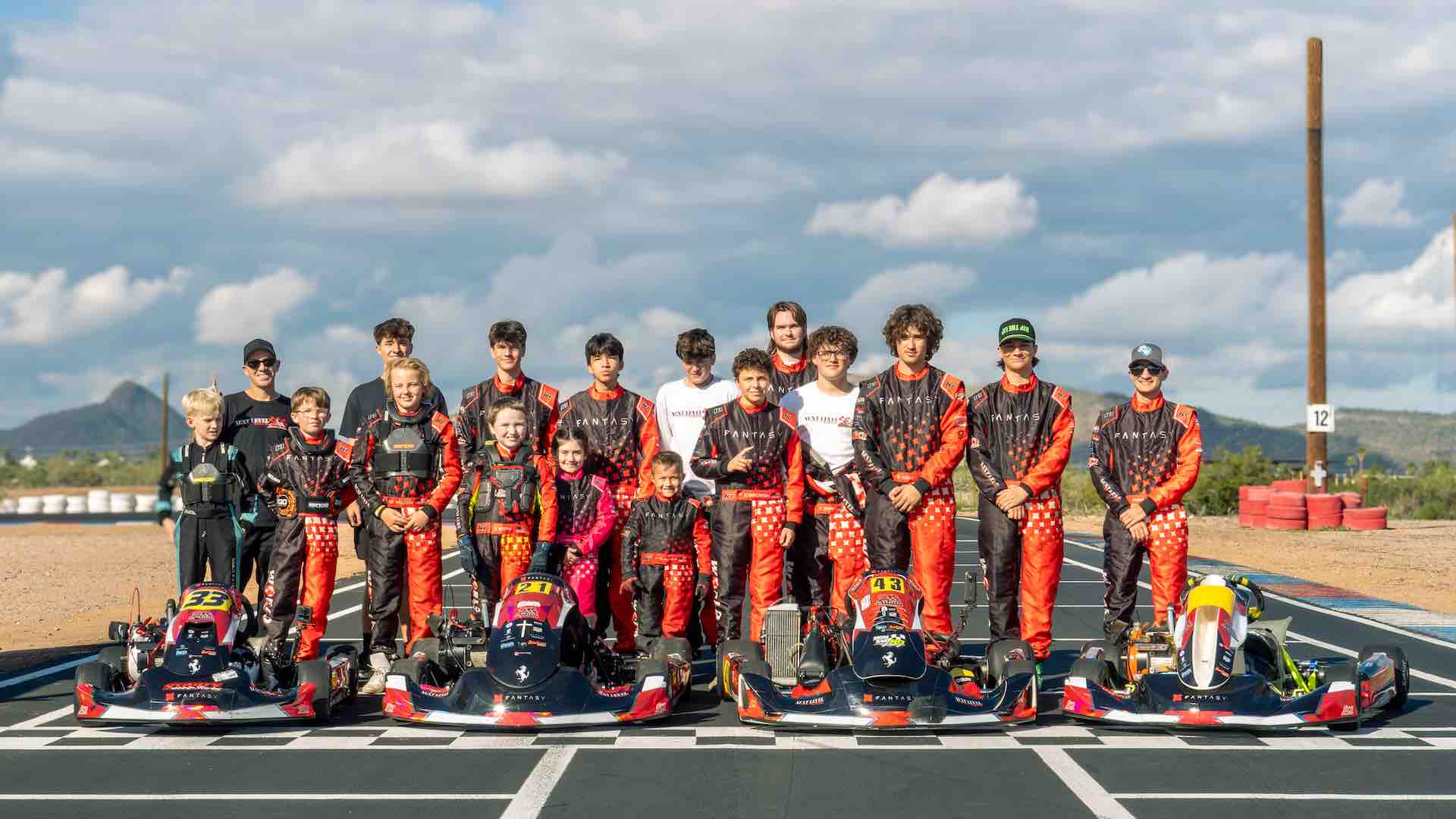
Karting may appear to be an individual sport on track, but in reality, it’s built on teamwork. Behind every driver’s success is a network of mechanics, coaches, and family members working to ensure everything is ready to go when the green flag drops.
The Driver’s Role
The driver is the most visible part of the team—the one gearing up, racing wheel-to-wheel, and making split-second decisions at speed. But winning in karting isn’t just about what happens during the laps themselves. What truly separates good weekends from great ones is what the driver brings off the track.
After every session, the driver becomes the primary sensor for the entire operation. How the kart felt under braking, where it struggled to rotate, whether it pushed on exit or felt loose mid-corner—these details guide the next adjustment. Clear, honest feedback allows coaches and crew to diagnose issues quickly and make changes with purpose rather than guesswork.
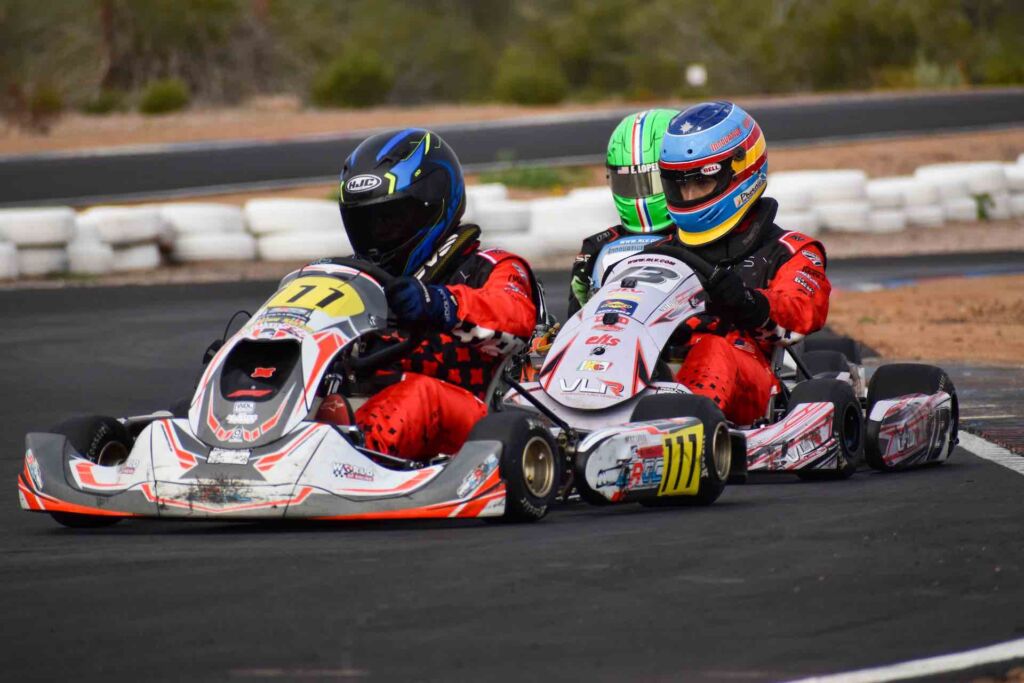
Effective drivers learn how to communicate, not just complain. Instead of saying “the kart feels bad,” they describe when and why it feels off. Was the rear sliding only in long corners? Did the kart bog on exit after a particular turn? Did the balance change as the tires came in? The more precise the feedback, the faster the team can respond.
Just as important is self-awareness. Drivers who take ownership of their performance—acknowledging missed braking points, over-aggression, or laps where patience would have paid off—help the team separate driver input from mechanical setup. That honesty builds trust and accelerates improvement.
In high-level karting, the driver isn’t just a racer—they’re a collaborator. When drivers listen to coaching, apply changes consistently, and return with thoughtful feedback, the entire team moves forward. That loop—drive, communicate, adjust, repeat—is where teamwork turns effort into results.
The Mechanics’ Contribution
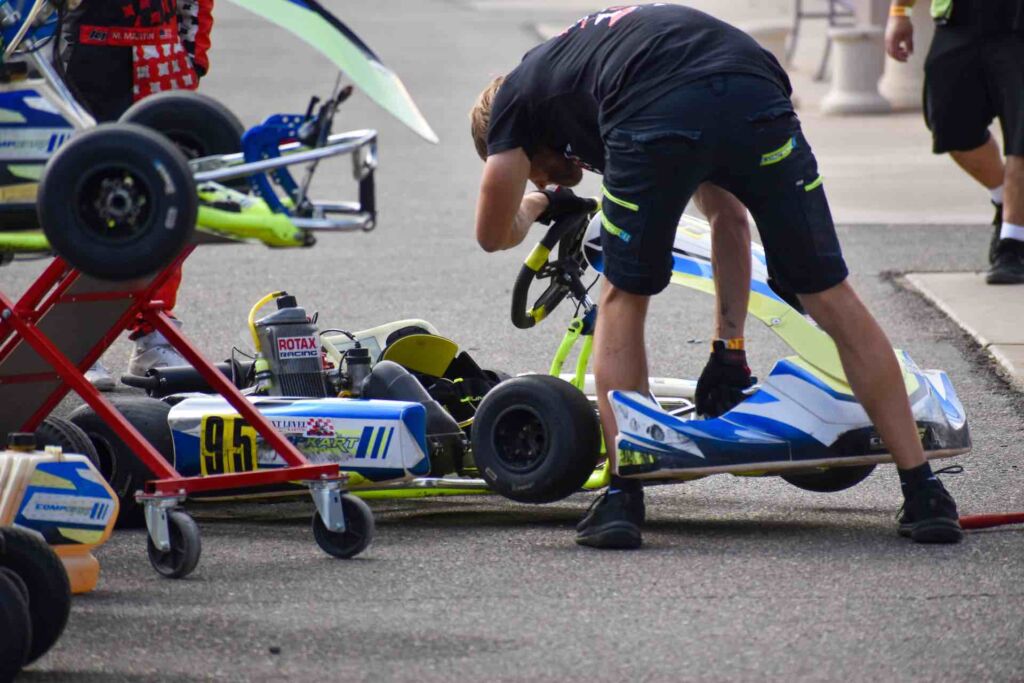
While the driver takes the spotlight on track, the mechanics (often a parent in club karting) are the quiet force that makes performance possible. Their work begins long before the engine fires—measuring, tightening, aligning, and double-checking every component that keeps a kart safe and competitive. A single loose bolt, a misaligned chain, or an overlooked crack in a chassis can end a race before it begins. Mechanics exist to make sure those problems never have a chance to surface.
A great mechanic doesn’t just maintain the kart—they anticipate what it will need as conditions evolve. Track temperature rises? They’re already thinking about tire pressures and gear changes. Rubber builds up on the racing line? They’re adjusting handling to match the increasing grip. If the driver reports understeer in long corners, the mechanic’s mind immediately goes to caster, front track width, and ride height. Their role is equal parts problem solver and strategist.
Mechanics also serve as the reliability backbone of the team. While drivers push karts to their limits, mechanics make sure the equipment can take it. They inspect brake pads, axels, sprockets, bearings, and fuel systems with a level of detail that borders on obsession—because in racing, the small things separate those who finish from those who win.
In the heat of a race weekend, their ability to work calmly under pressure is invaluable. Whether it’s a last-minute engine issue heading to the grid, a bent steering column from contact, or a gear change between heats, mechanics keep the operation moving. Their speed and composure often determine whether a driver returns to the next session ready to fight or watches from the sidelines.
Ultimately, mechanics are the unseen heroes who transform driver feedback into performance. When they trust the driver’s input and the driver trusts their work, the kart becomes something greater than its parts. In that partnership—precision, trust, and preparation—championships are built.
Coaching and Strategy
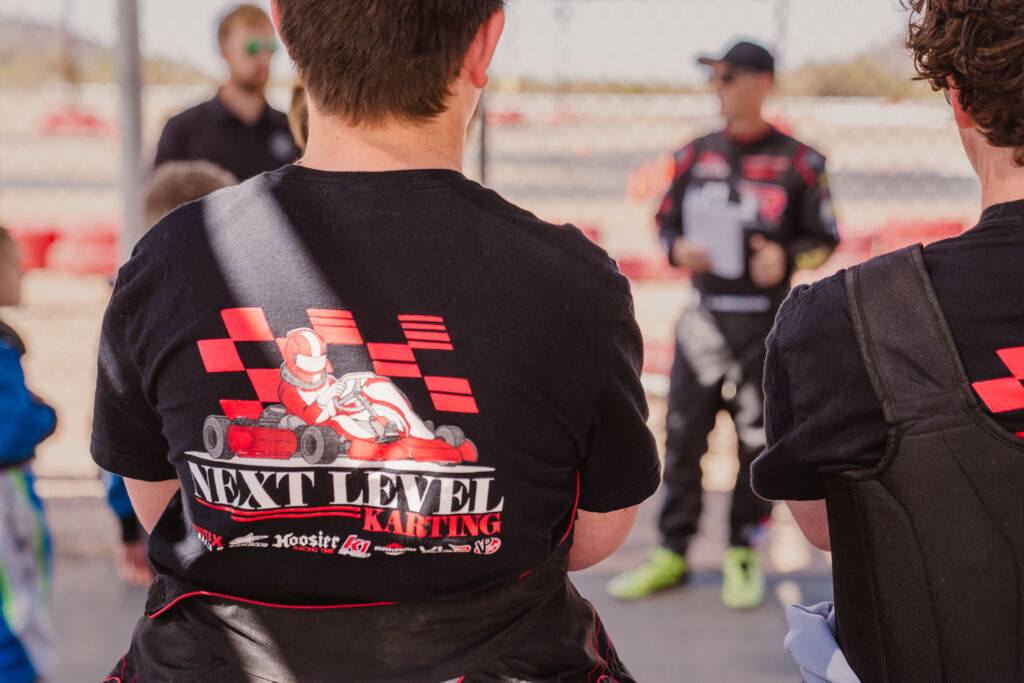
Coaches are the connective tissue between raw speed and repeatable performance. Their role goes far beyond giving lap-time targets or calling out braking points—they translate experience, data, and observation into clear direction a driver can actually use under pressure.
On track, coaches watch the details drivers often can’t see from the seat: lines through traffic, body position under braking, where momentum is being lost or gained relative to competitors. After each session, they break those observations down into actionable adjustments—small changes that compound over the course of a race weekend. Sometimes that means refining overtaking strategy; other times it means knowing when not to push and letting the race come to you.
Data is a powerful tool, but a good coach knows it’s only valuable when it’s understood. Lap times, split comparisons, and trends are used to confirm what the driver felt—or challenge assumptions when perception doesn’t match reality. Coaches help drivers connect feeling to fact, building trust in both instinct and analysis.
Just as important is the mental side of racing. Coaches prepare drivers for adversity—bad starts, lost positions, changing conditions, or contact on track. They help drivers reset after mistakes, manage nerves before big races, and stay composed when emotions run high. Confidence, focus, and decision-making are trained just like braking and throttle control.
At its best, coaching creates clarity. Drivers know the plan, understand their role in the race, and trust the process unfolding around them. When coaching, mechanics, and drivers are aligned, strategy becomes execution—and execution becomes results.
The Unseen Effort
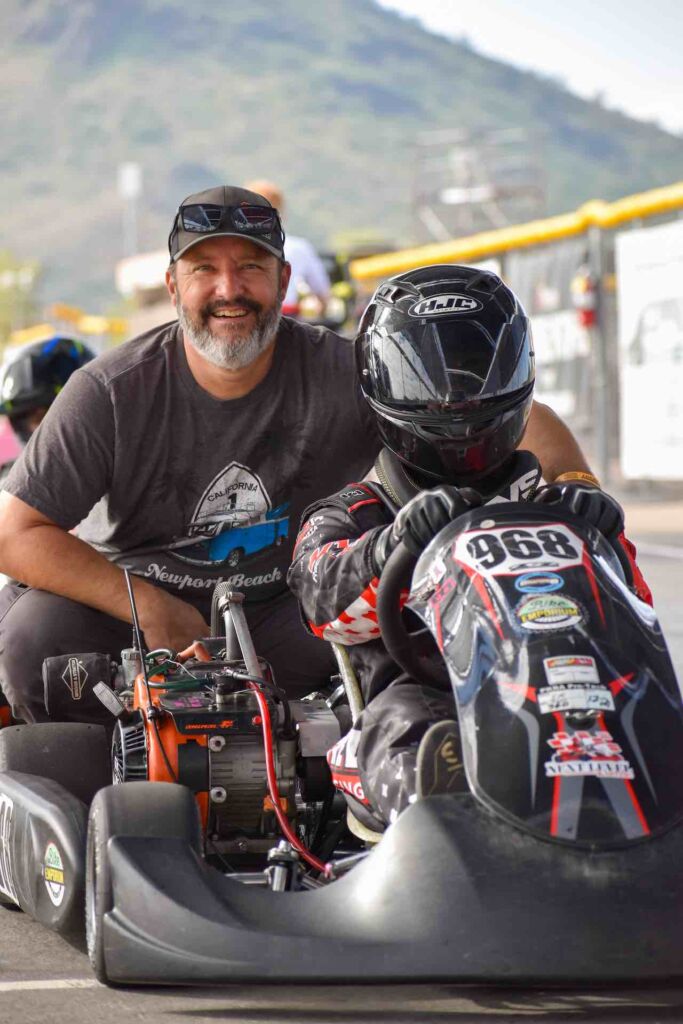
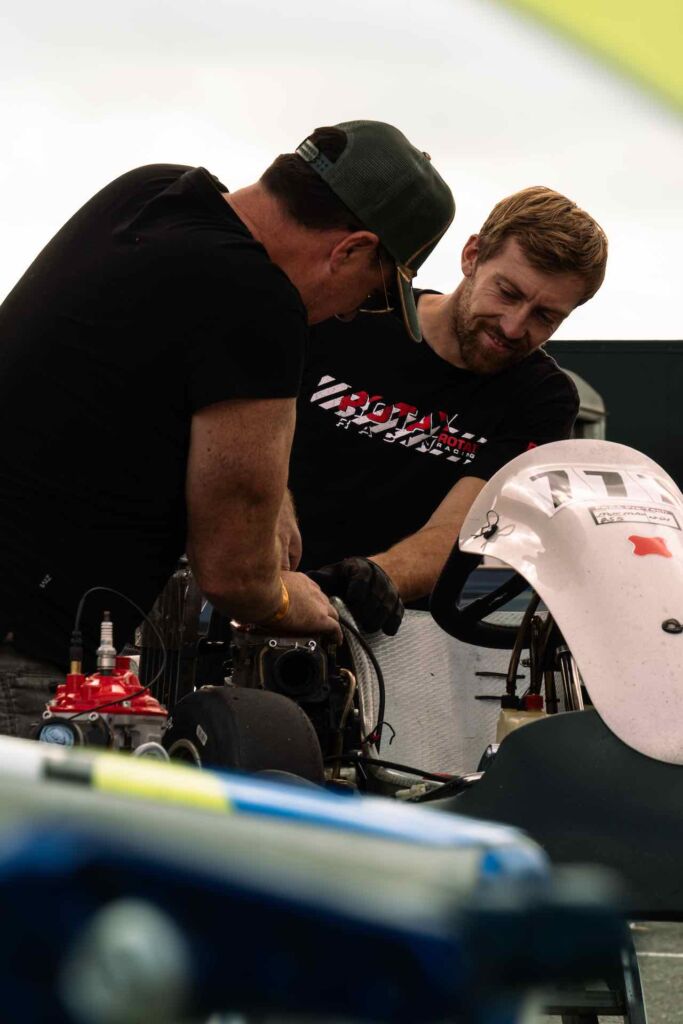
Behind every kart that rolls onto the grid is an entire support system working quietly in the background. Family members and supporters may not turn wrenches or review data, but they carry the weight of everything that allows a driver to perform at their best. Their contributions rarely make the highlight reel, but without them, race weekends simply don’t function.
They’re the ones loading trailers at dawn, hauling gear across the pits, organizing spare parts, and making sure the driver has everything they need before each session. They manage the essentials—food, hydration, sunscreen, race gear, a cool towel, and a calm voice when nerves spike. A well-timed snack or a reminder to drink water can make the difference between a fading driver and one who’s sharp in the final laps.
Parents and supporters also serve as emotional anchors. They celebrate the good sessions, steady the tough ones, and create an environment where drivers feel supported no matter the outcome. That stability gives young racers the freedom to take risks, learn from mistakes, and return stronger.
And then there’s the logistical marathon: travel planning, scheduling, registrations, pit setup, social media updates, race team communication, and everything in between. These responsibilities often happen late at night or early in the morning, far away from the noise of the racetrack—but they keep the operation running with quiet consistency.
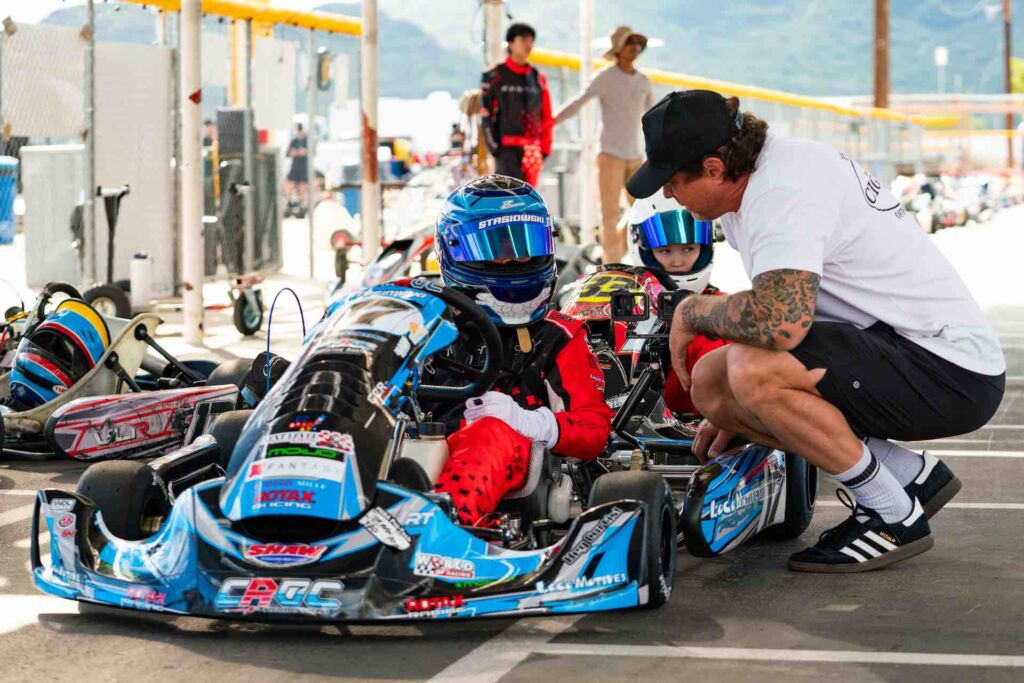
In a sport built on precision and teamwork, the unseen effort is what makes the seen effort possible. When families, supporters, and crew members align, they create a foundation strong enough for drivers to focus solely on one thing: performing at their highest level.
Teamwork is the foundation of success in karting. Every role, from the driver to the smallest helping hand, contributes to the results seen on track.